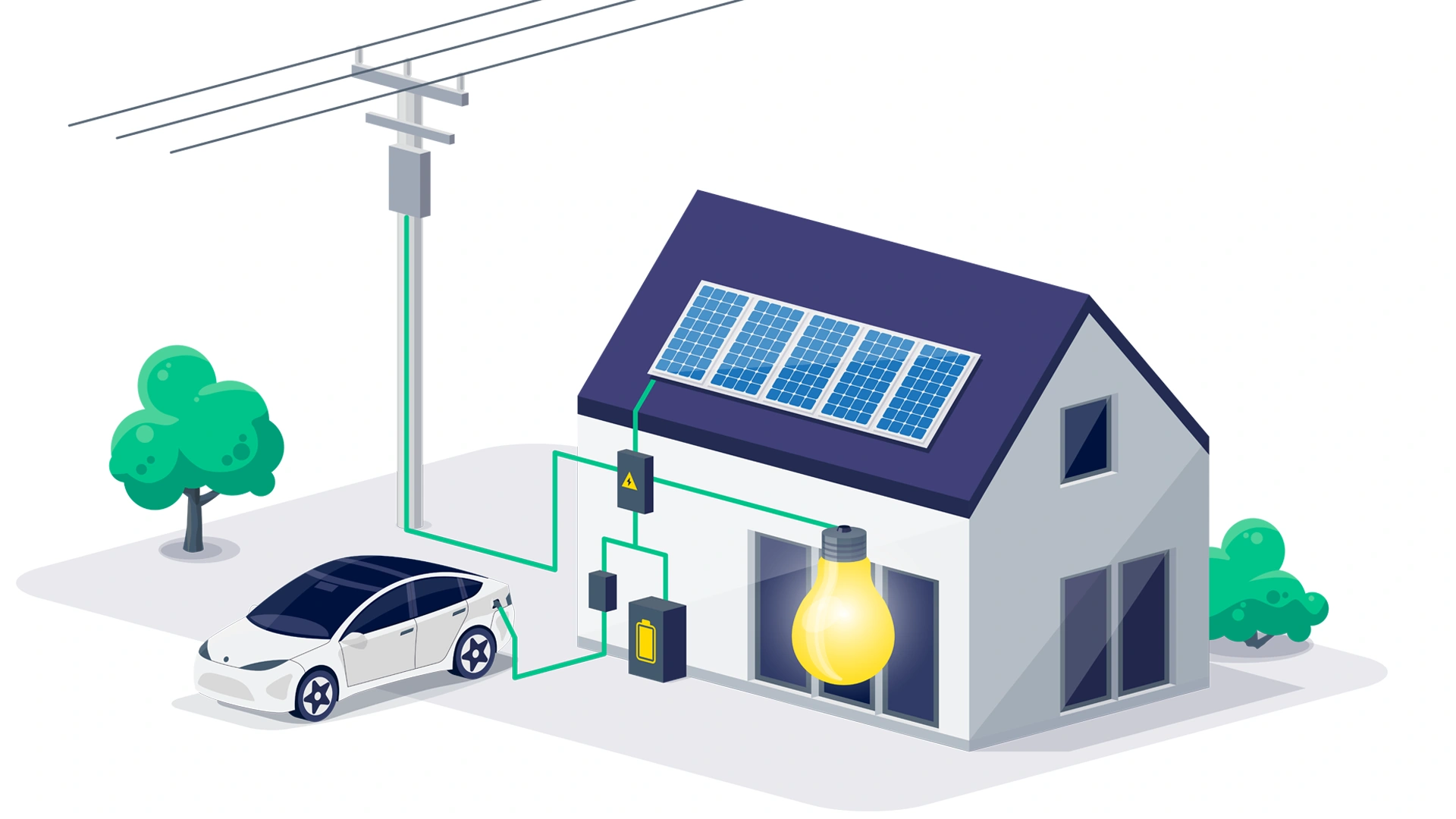
People often say “tax credits” when they mean “any help with the cost of solar”. In the UK, solar support usually isn’t a single headline credit — it’s a mix of VAT treatment, export payments, and eligibility-based schemes that can change over time.
If you’re in Bournemouth or Dorset, the most reliable savings still come from sizing the system properly and using more of your solar at home. Incentives can help, but they’re a bonus — not the main reason solar can work financially.
Key takeaways
- Check whether your installation qualifies for 0% VAT (rules apply).
- SEG can pay you for exported electricity, but the biggest value often comes from using solar at home.
- Always verify incentives on official sources — schemes and eligibility change.
- The best “saving” is a correctly sized system matched to your usage pattern.
1) 0% VAT on energy-saving materials (where eligible)
The UK has applied 0% VAT to certain energy‑saving materials (including many residential solar PV installations) under specific rules. This can reduce the overall installation price compared to standard VAT.
Official guidance: GOV.UK VAT on energy‑saving materials (Notice 708/6)
Installer quotes should make clear what VAT rate is being applied and why. If something looks unclear, ask — it’s normal to request clarity.
2) Smart Export Guarantee (SEG): payment for exports
If your system exports surplus electricity to the grid, you may be paid through the Smart Export Guarantee. Rates depend on your supplier and tariff. SEG is useful — but for many households, the bigger win is self-consumption (using solar power directly at home).
How to get more value than “just export”
- Run flexible appliances in daylight (dishwasher, washing machine, dryer if needed).
- Heat water in daylight if your setup allows it (ask installer/energy advisor).
- If you have an EV, consider daytime top-ups when possible.
3) ECO4 and support schemes (eligibility varies)
Some support is targeted at eligible households to improve energy efficiency. ECO4 is one example. Whether solar is available through a scheme depends on route, eligibility, local authority flexibility, and what measures are being prioritised.
Official info: GOV.UK ECO4 information
4) The “real” way to save: match system design to your life
Two homes can install the same size solar system and get very different outcomes depending on usage pattern. A good installer will ask about:
- who’s home during the day,
- whether you can shift some loads to daylight,
- plans for EV charging, electric heating or home office use.
5) Compare quotes properly (so you don’t overpay)
- Like-for-like equipment: panel models, inverter type, monitoring.
- What’s included: scaffolding, bird protection, warranty length, electrical upgrades.
- Assumptions: expected kWh/year generation and shading impacts.
- Battery option: price PV alone and PV + battery so you can decide with real numbers.
Quick checklist before you book an install
- Ask for the VAT rate in writing.
- Check if your installer is MCS certified.
- Confirm export meter setup if you want SEG payments.
- Get an expected annual kWh figure and compare across quotes.
Disclaimer
Incentives and eligibility change. Always check official government websites for the latest information before making decisions based on incentives.