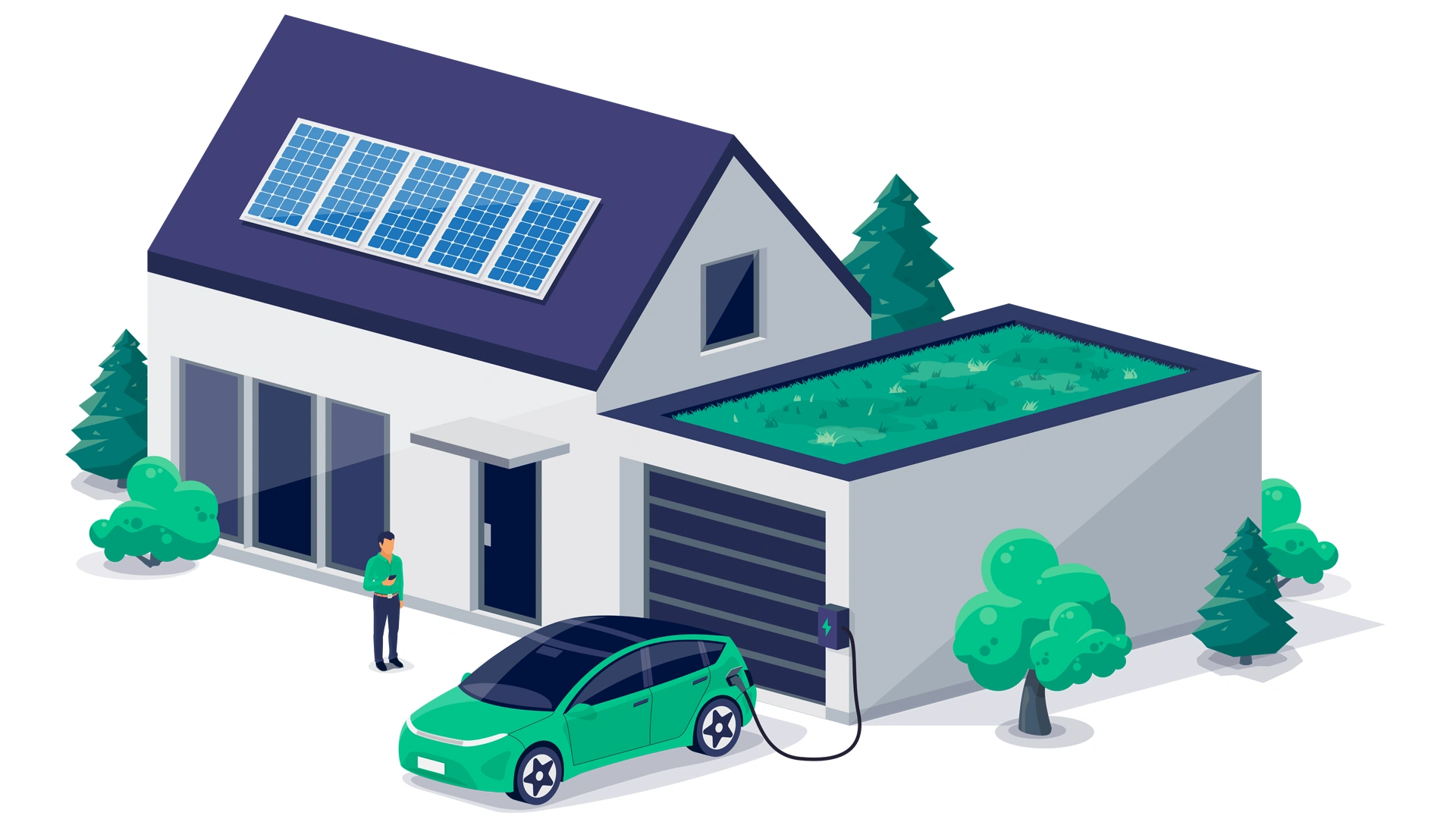
Electric vehicles (EVs) are becoming a symbol of the shift to cleaner energy. But “EVs are green” is a bit too simple. The real story is: EVs remove exhaust pollution where you drive, and they can reduce climate emissions depending on how the electricity is made. The good news is that the UK electricity grid is steadily getting cleaner — and if you add solar, you can make charging even cleaner again.
Key takeaways
- No tailpipe emissions improves local air quality immediately.
- Overall emissions depend on charging electricity (grid mix, tariffs, and whether you have solar).
- Solar + EV charging is most effective when you can charge during daylight.
- You don’t need a battery to benefit from solar — but a battery can increase flexibility.
1) Local air quality: why EVs matter in towns
Petrol and diesel vehicles emit pollution from the tailpipe (including nitrogen oxides). That pollution happens right on the streets where people live, walk, cycle and wait at crossings. EVs don’t have exhaust emissions while driving, which is why they’re often linked to cleaner city centres and better air quality.
2) Climate impact: EVs shift emissions upstream
EVs still use energy — the difference is that the energy is delivered as electricity instead of fuel. That means the climate impact depends on the electricity used to charge. In the UK, as more renewable generation comes online, the average carbon intensity of the grid tends to improve over time. In simple terms: an EV you buy today can get cleaner over its lifetime as the grid gets cleaner.
3) Manufacturing and lifecycle emissions (a sensible way to think about it)
It’s true that building EV batteries has an environmental footprint. A fair comparison looks at the whole lifecycle: manufacturing + use + end‑of‑life. For many drivers, the lack of tailpipe emissions and the ability to charge on a cleaner grid can make EVs a net improvement over time — particularly for higher annual mileage.
4) How solar improves EV charging
If you have solar panels, you can generate electricity on your roof and feed it straight into your home — including your EV charger. When your EV is charging at the same time your panels are producing, you’re effectively driving on sunlight.
Charging routines that pair well with solar
- Work-from-home: plug in during the day and let solar cover part of the charge.
- Weekend charging: top up over a few daylight hours.
- Split charging: do a small daytime top‑up from solar and finish overnight on a cheap tariff.
5) Do you need a smart charger?
A smart charger isn’t essential, but it can help. Depending on the model, smart chargers can schedule charging for cheaper times, and some can prioritise surplus solar (feature support varies by charger/inverter setup). If your goal is “use as much solar as possible”, it’s worth asking installers about solar‑aware charging options.
6) Do you need a home battery to charge an EV?
Not necessarily. A battery can store midday solar and release it later, but EV charging is often a large load. Many households get value from solar even without storage by using solar for the home during the day and charging the EV overnight on a time‑of‑use tariff.
7) Practical ways to reduce charging cost and footprint
- Charge little-and-often: if you can top up in daylight, you may capture more solar.
- Check your tariff: off‑peak pricing can change what’s “best”.
- Be efficient: smooth driving, correct tyre pressure and sensible speeds reduce energy use.
Bottom line
EVs can improve local air quality and reduce transport emissions — especially as electricity gets greener. If you’re considering solar + EV charging in Bournemouth, Poole, Christchurch or wider Dorset, use Get Quotes and we’ll pass your details to an installer who can advise on a setup that fits your routine.